

Editor's pick
Staplers, Hole Punches and Desk Essentials for Schools
Read article →
GLS supports School Business Managers, finance teams and procurement leaders with practical solutions that help schools secure value for money, reduce administrative workload and make informed purchasing decisions. From stationery procurement and supplier evaluation to budget planning, framework agreements, eProcurement, finance system integrations and MAT-wide ordering, this hub brings together data-led guidance, procurement tools and operational insights to help schools maximise resources while supporting teaching and learning.
Schools are increasingly adopting eProcurement systems to improve visibility, strengthen financial controls and reduce administrative workload. Traditional procurement processes often rely on manual approvals, email chains and disconnected systems, which can make it difficult to track spending and maintain consistent oversight.
→ Related Guide: eProcurement for Schools: What It Is and How It Works

New Year’s resolutions for school business managers work best when they make everyday school life more manageable, not more demanding. Focus on small, realistic changes that reduce unnecessary workload, protect time for rest, improve organisation and support wellbeing. The most useful resolutions are specific, sustainable and flexible enough to fit around the realities of a busy school.

School business professionals are central to the financial and operational running of schools, yet workload can quickly become unmanageable when interruptions, additional responsibilities and after-hours working become routine. The most effective response is not simply to work faster, but to make workload visible, clarify priorities, protect focused time and simplify processes that create avoidable administration.

Remote and flexible working can help school teams collaborate effectively when staff are not in the same place, but the right tools matter. Schools need platforms that are simple to use, secure, well managed and appropriate for their existing systems. Project management, communication, meetings and file sharing are the four areas where the right technology can make the biggest difference.

A back-to-school checklist helps School Business Managers move from the immediate September rush into a more organised, manageable routine for the term ahead. The most useful checklist covers both school operations and personal wellbeing: prioritising essential tasks, reviewing procedures, supporting staff, keeping resources organised and building realistic habits that help prevent workload from becoming overwhelming.

SEND reform is expected to place greater emphasis on inclusion, early intervention and consistent support across mainstream schools. This article explores how school leaders, SENCOs and SBMs can prepare by reviewing resources, learning environments, staffing and whole-school provision to ensure every pupil can access learning, participate fully and thrive.

Oracy is becoming a growing curriculum priority as schools recognise the role spoken language plays in learning, confidence and academic success. This article explores how school leaders can prepare for future oracy expectations by creating communication-rich classrooms, supporting teacher development and ensuring resources, environments and curriculum planning work together to develop pupils' speaking and listening skills.

Reading records remain one of the simplest and most effective tools for supporting reading development in primary schools. Used consistently, they help teachers track progress, encourage home-school communication and build positive reading habits. For school business managers, they are also a relatively low-cost resource that can support whole-school reading strategies when chosen carefully and used well.

MAT procurement becomes easier when trusts standardise core supplies, keep local school input visible and use ordering tools that reduce duplication, chasing and manual admin. For MAT finance directors, the goal is not to centralise everything for the sake of it. It is to create a system that gives the trust better control while helping individual schools get what they need, when they need it.

School procurement is about more than finding the lowest price. By improving processes, strengthening supplier relationships and using digital procurement tools, schools can reduce administrative workload, improve financial visibility and create both cost and time efficiencies. This guide explores practical ways for School Business Managers to streamline procurement while maintaining strong governance and value for money.
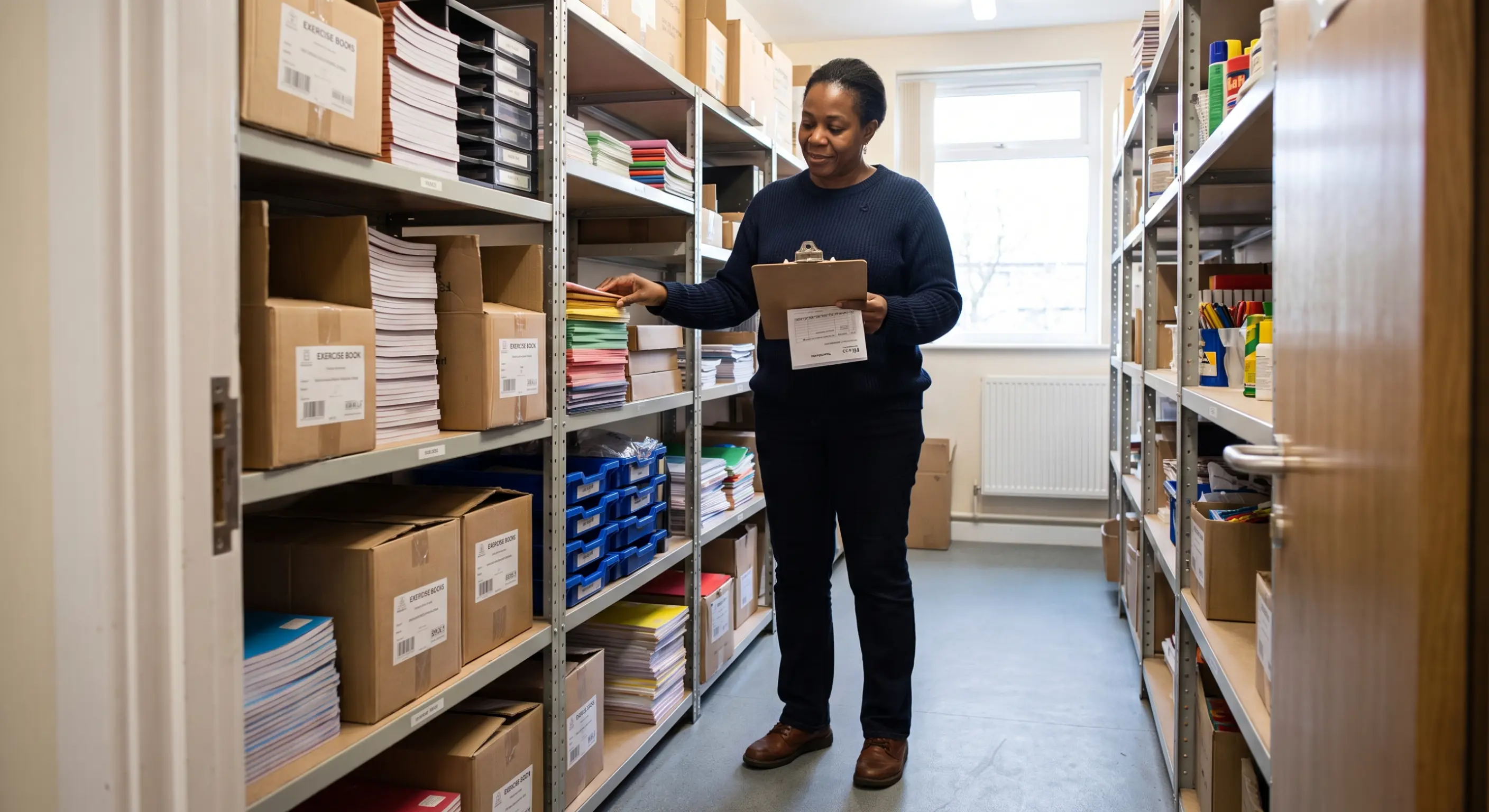
School Business Managers are under increasing pressure to balance procurement, budgets, compliance and operational responsibilities. This guide explores practical ways to reduce administration, streamline purchasing processes and create more time for strategic leadership through smarter systems and digital procurement tools.

Framework agreements help schools purchase goods and services through pre-approved procurement routes, reducing administrative burden while supporting compliance and value for money. For school business managers, frameworks can provide confidence that purchasing decisions follow recognised procurement processes without requiring every procurement exercise to start from scratch.

School procurement works best when it is reviewed regularly, not only when budgets are under pressure or supplies run out. For school business managers, a termly procurement checklist helps control spend, reduce waste, evidence value for money and ensure classrooms, offices and support teams have what they need before small issues become bigger problems.
Schools usually achieve the greatest savings through planning, supplier evaluation, reducing waste and improving consistency rather than simply choosing the lowest-priced product.
Value for money considers quality, reliability, service levels and long-term costs alongside initial purchase price.
This varies considerably between settings. Benchmarking data can help schools assess whether spending levels are broadly aligned with comparable schools.
A framework agreement is a compliant route to market that allows schools to purchase from pre-approved suppliers.
RM6278 relates to managed staff banks and workforce services, not general education supplies. Schools looking for a current framework or compliant route for education supplies procurement can use DfE’s Buying for Schools and Get Help Buying for Schools services to identify an appropriate option.
Standardisation, central oversight, collaborative purchasing and procurement visibility can significantly improve efficiency.
Follow GLS for practical classroom ideas, product inspiration, school procurement guidance and the latest education news.