

Editor's pick
Early Years Resources for Primary Schools
Early Years resources help children develop across the seven areas of learning and development identified within the EYFS Statutory Framework (DfE, 2025). From mud kitchens, water trays and sensory resources to role play, small world play and outdoor learning environments, high-quality EYFS provision supports communication, physical development, creativity, problem-solving and exploration through play. This hub brings together curriculum-linked guidance, statutory requirements and practical resource recommendations to help schools create effective Early Years learning environments.
EYFS Areas of Learning and Development
EYFS Areas of Learning and Development: Which Resources Support Each Area?
The EYFS Statutory Framework (DfE, 2025) identifies seven areas of learning and development that shape children's early education. Effective EYFS environments provide opportunities for children to learn through play, exploration, active learning and critical thinking. The table below maps common EYFS resource categories to the statutory areas of learning.
Source: EYFS Statutory Framework (DfE, 2025), supported by Development Matters (2021).
| EYFS area of learning | Suggested resource categories | Example learning opportunities |
|---|---|---|
| Communication and Language | Role play kitchens, storytelling resources, puppets and small-world play | Conversation, listening, questioning, vocabulary development and storytelling |
| Personal, Social and Emotional Development | Collaborative play resources, role play areas, emotion resources and wellbeing spaces | Sharing, turn-taking, recognising emotions, building relationships and developing independence |
| Physical Development | Mud kitchens, sand and water play, climbing equipment, wheeled toys and construction resources | Fine and gross motor development, coordination, balance and safe movement |
| Literacy | Story sacks, books, puppets, mark-making areas and communication-rich role play | Early reading, phonological awareness, storytelling and purposeful mark-making |
| Mathematics | Measuring tools, water-play resources, loose parts, blocks and sand-investigation resources | Counting, sorting, pattern, comparison, shape, capacity and measurement |
| Understanding the World | Small-world play, mud kitchens, nature areas, investigation equipment and sensory resources | Exploring communities, environments, materials, living things and natural processes |
| Expressive Arts and Design | Creative materials, musical instruments, loose parts, costumes and imaginative-play resources | Creating, performing, experimenting with materials and developing imaginative narratives |
Featured articles
Ready to order? Browse the full early years range with free next-day delivery on orders over £40.
Shop early years range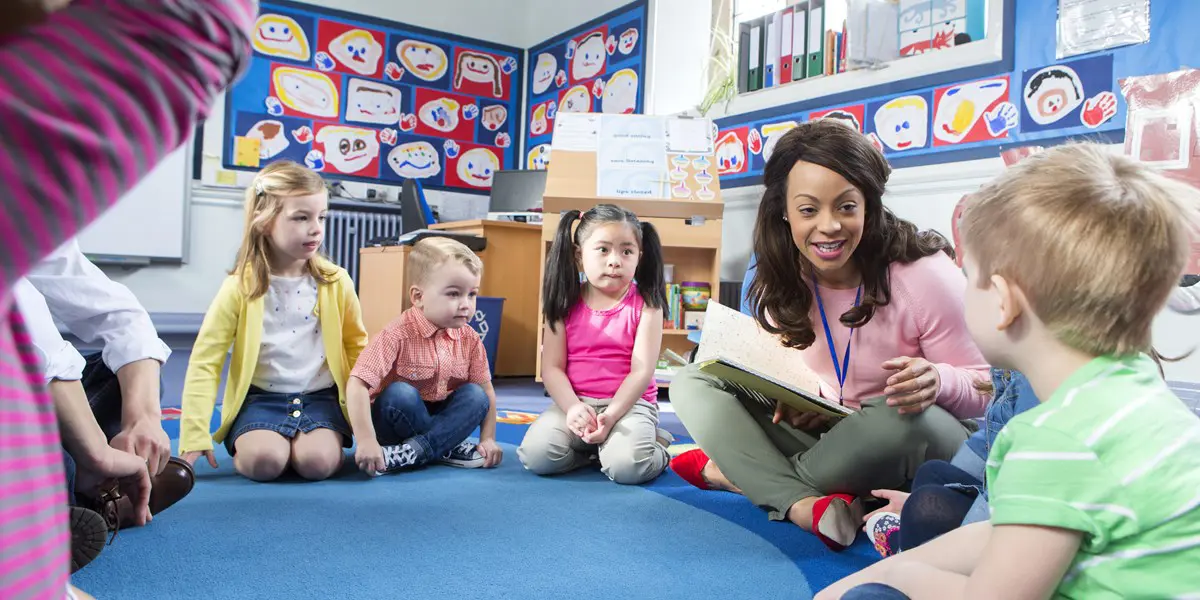
How to Make Your Nursery Stand Out from the Rest
A nursery stands out when families can see consistent, high-quality care, purposeful learning, strong communication and a team that knows its children well. The best settings do not rely on gimmicks. They listen to parents, create engaging environments, support practitioners and keep improving their provision while meeting the Early Years Foundation Stage requirements.
Rachel Pangburn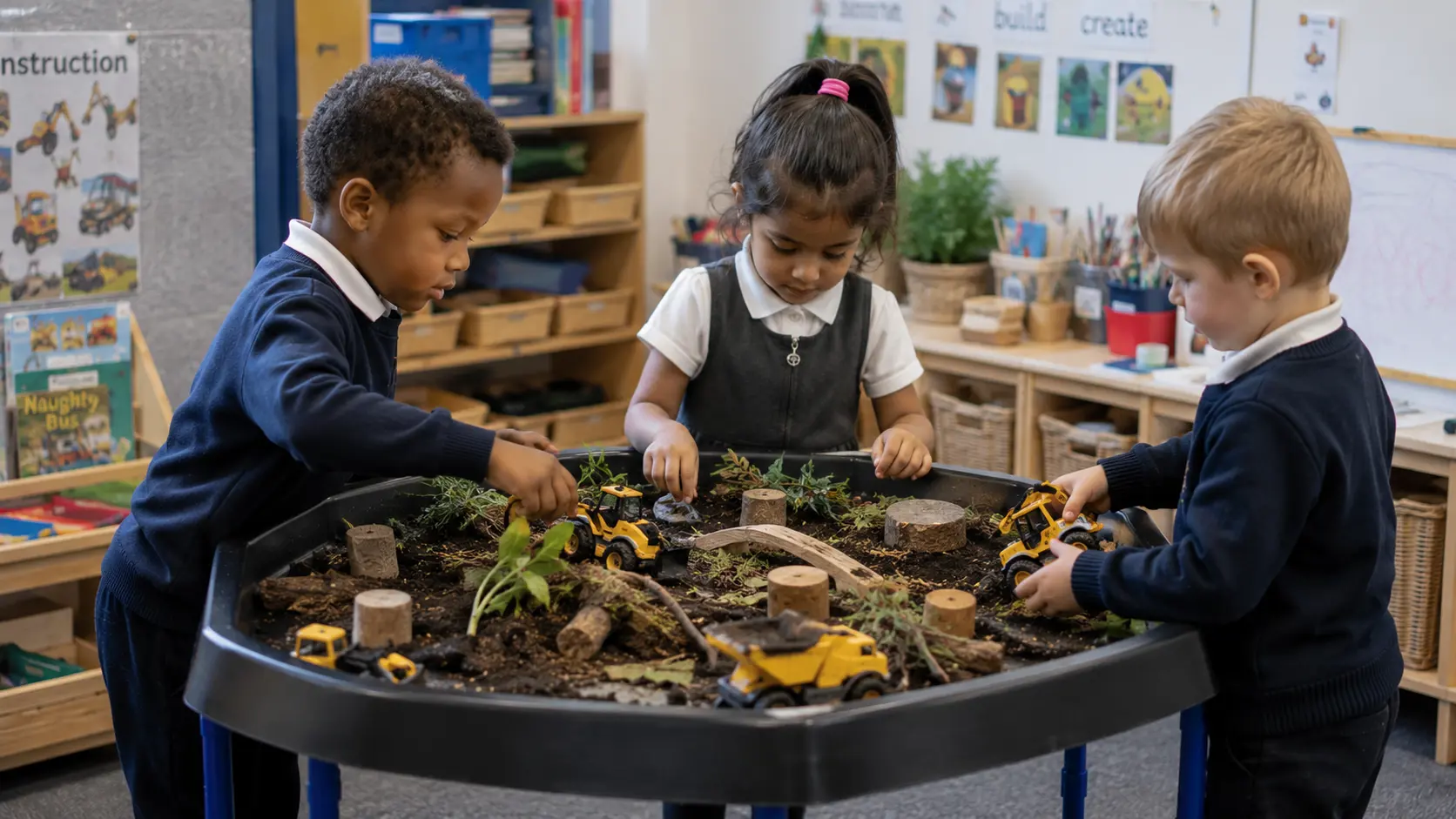
Tuff Trays in Schools: Uses, Sizes and How to Set Them Up
Tuff trays have become one of the most versatile and widely used resources in Early Years classrooms. Supporting everything from sensory exploration and small world play to early mathematics, communication and creative learning, they provide practitioners with a flexible space that can be adapted to children's interests and developmental needs.
Natalie McMunn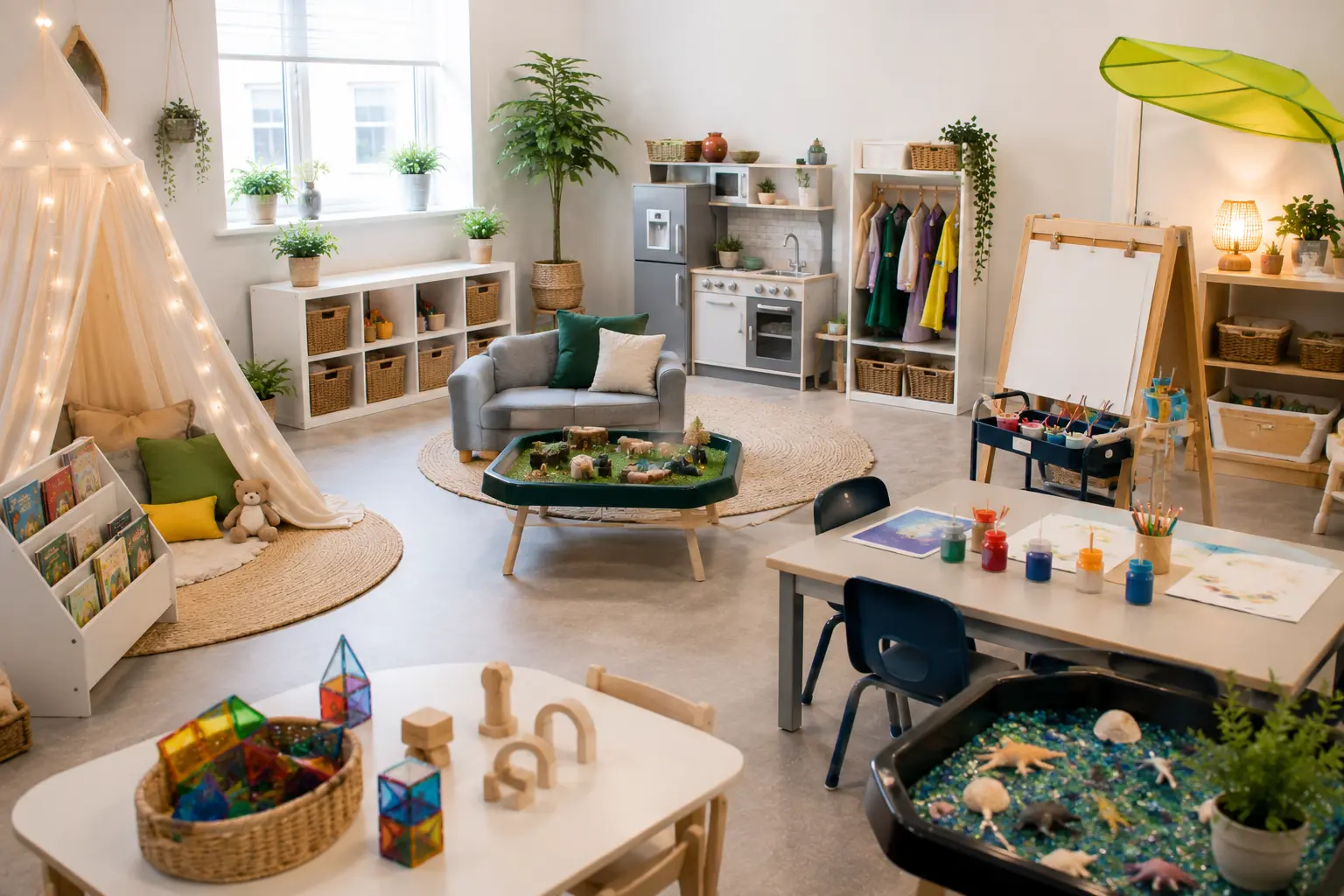
EYFS Learning Environment Inspiration: Ideas for Every Area
An effective EYFS learning environment is built around the principle of enabling environments within the DfE EYFS Statutory Framework. Rather than simply housing resources, the environment should actively support children's development, independence, curiosity and confidence. The strongest EYFS classrooms carefully balance structure and flexibility, ensuring every area of provision contributes meaningfully to learning across the seven areas of development while remaining responsive to children's interests and needs.
Jack Clarke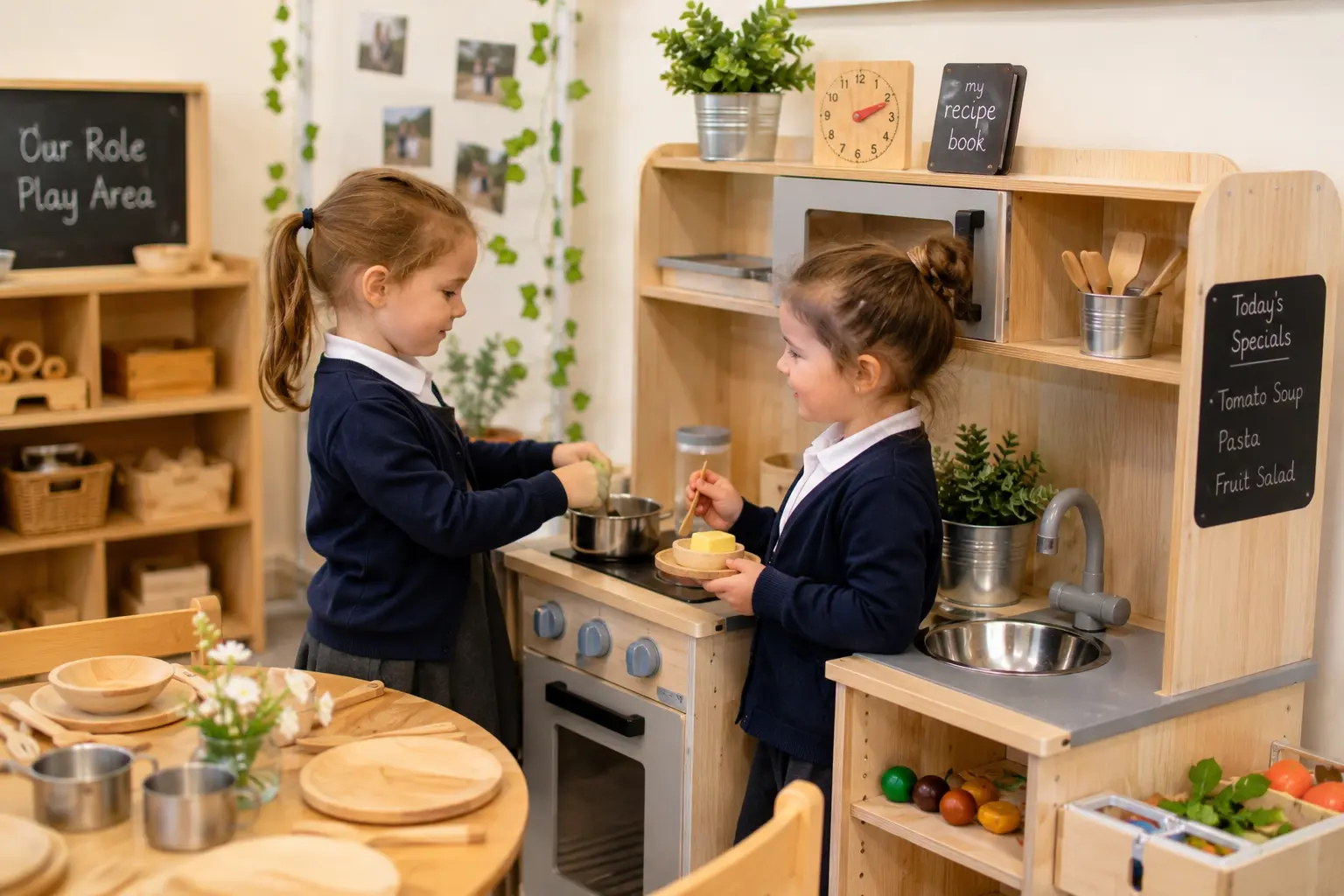
Role Play Kitchens for Schools: A Complete EYFS Buying Guide
Role play kitchens are one of the most effective EYFS resources because they support multiple areas of learning through everyday play experiences. Aligned with Expressive Arts and Design and Understanding the World within the DfE EYFS Statutory Framework, they help children develop communication skills, creativity, social understanding and confidence. When chosen carefully and used as part of continuous provision, a role play kitchen can support learning every day of the academic year while delivering excellent long-term value for schools.
Carla Bonner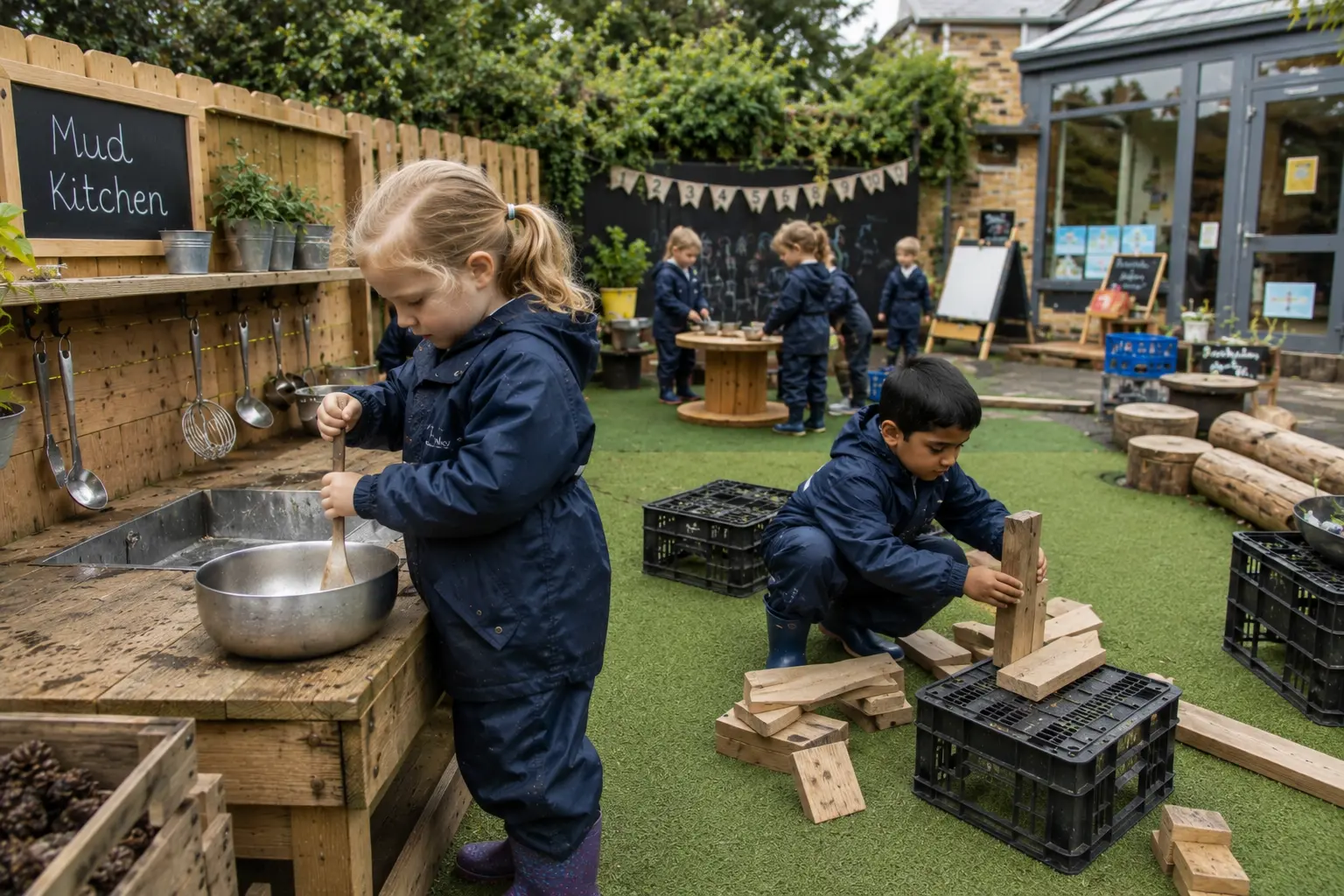
Outdoor Play Equipment for EYFS: What Primary Schools Need
Outdoor play is a statutory requirement within the DfE EYFS Statutory Framework and should be considered an integral part of children's daily learning rather than an optional extra. Effective outdoor provision supports Physical Development, Communication and Language, Personal, Social and Emotional Development, Understanding the World and Expressive Arts and Design. The most successful EYFS outdoor spaces are not necessarily the largest or most expensive; they are the ones that provide purposeful opportunities for exploration, movement, creativity and independent learning.
Natalie McMunn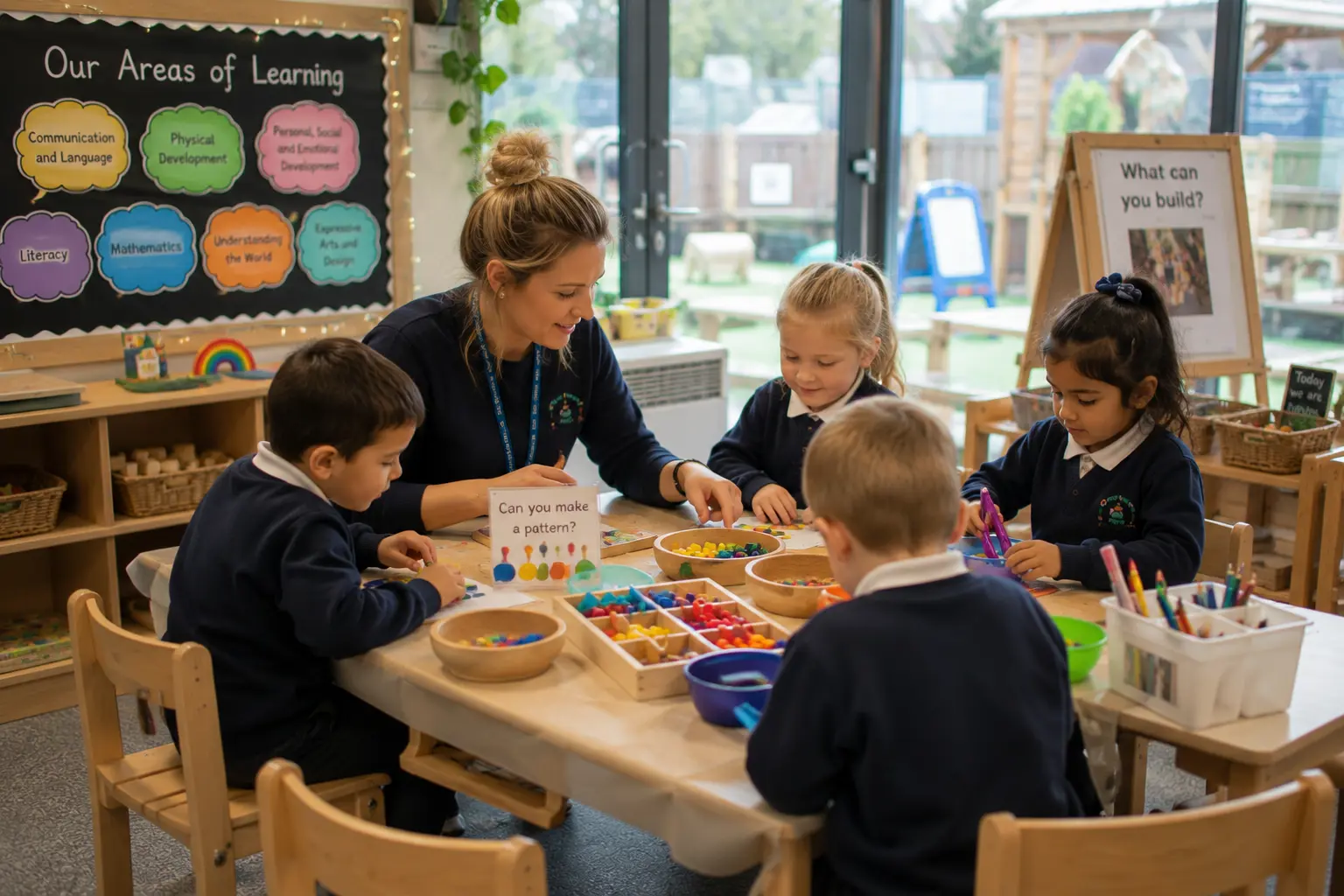
EYFS Areas of Learning: Which Resources Support Each Area?
The DfE EYFS Statutory Framework identifies seven areas of learning and development that form the foundation of Early Years education. Effective EYFS environments do not treat these areas as separate subjects. Instead, they provide resources and experiences that allow children to develop multiple skills simultaneously through play, exploration and meaningful interactions. Understanding how resources support each area helps teachers create purposeful provision while ensuring every part of the classroom contributes to children's development.
Carla Bonner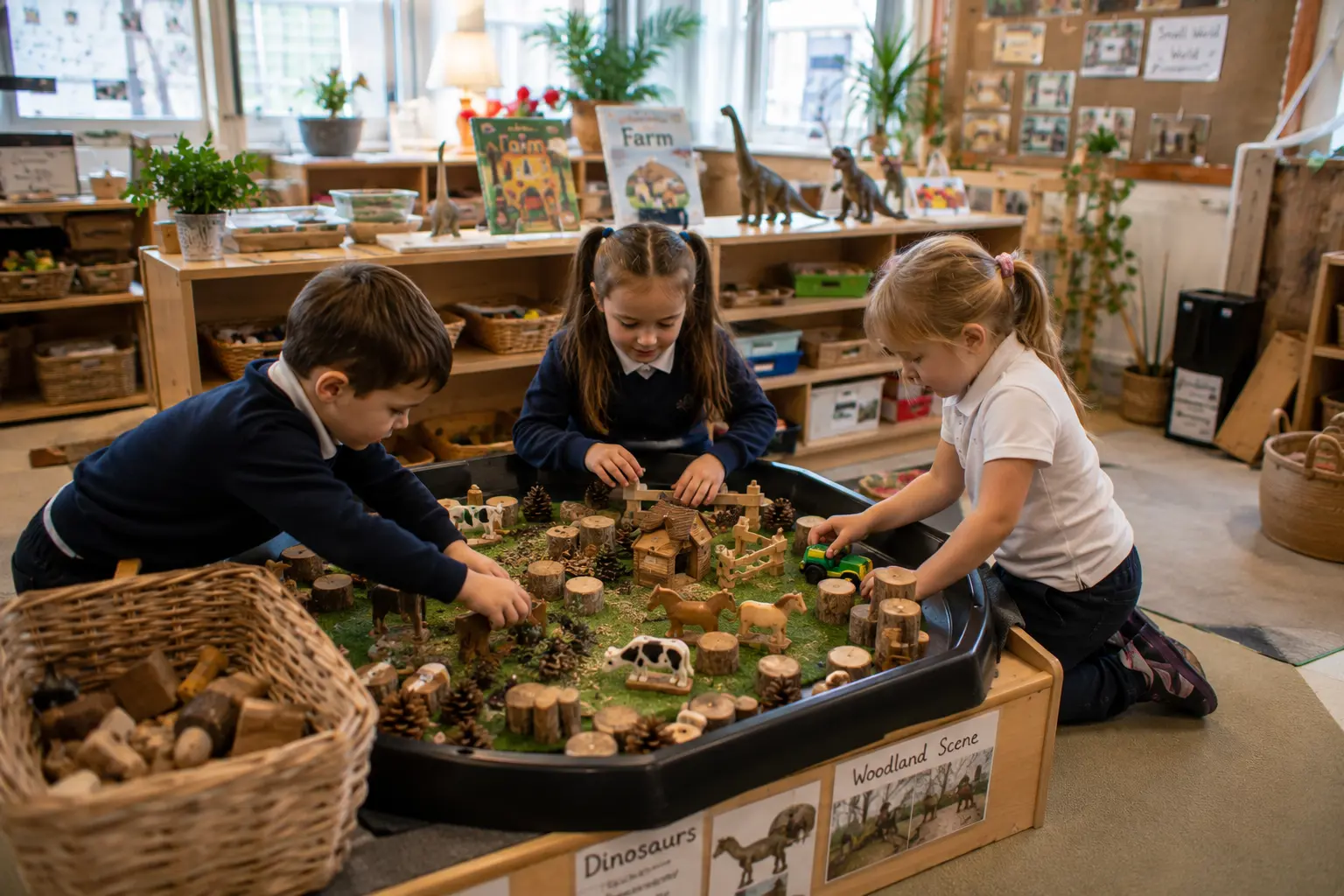
How to Set Up an EYFS Classroom: A Practical Guide
An effective EYFS classroom is organised around the seven areas of learning within the DfE EYFS Statutory Framework, while remaining flexible enough to support child-led exploration, continuous provision and individual development. The best classroom setups balance structure with independence, ensuring children can access resources easily, move confidently between activities and engage in meaningful learning experiences throughout the day.
Carla Bonner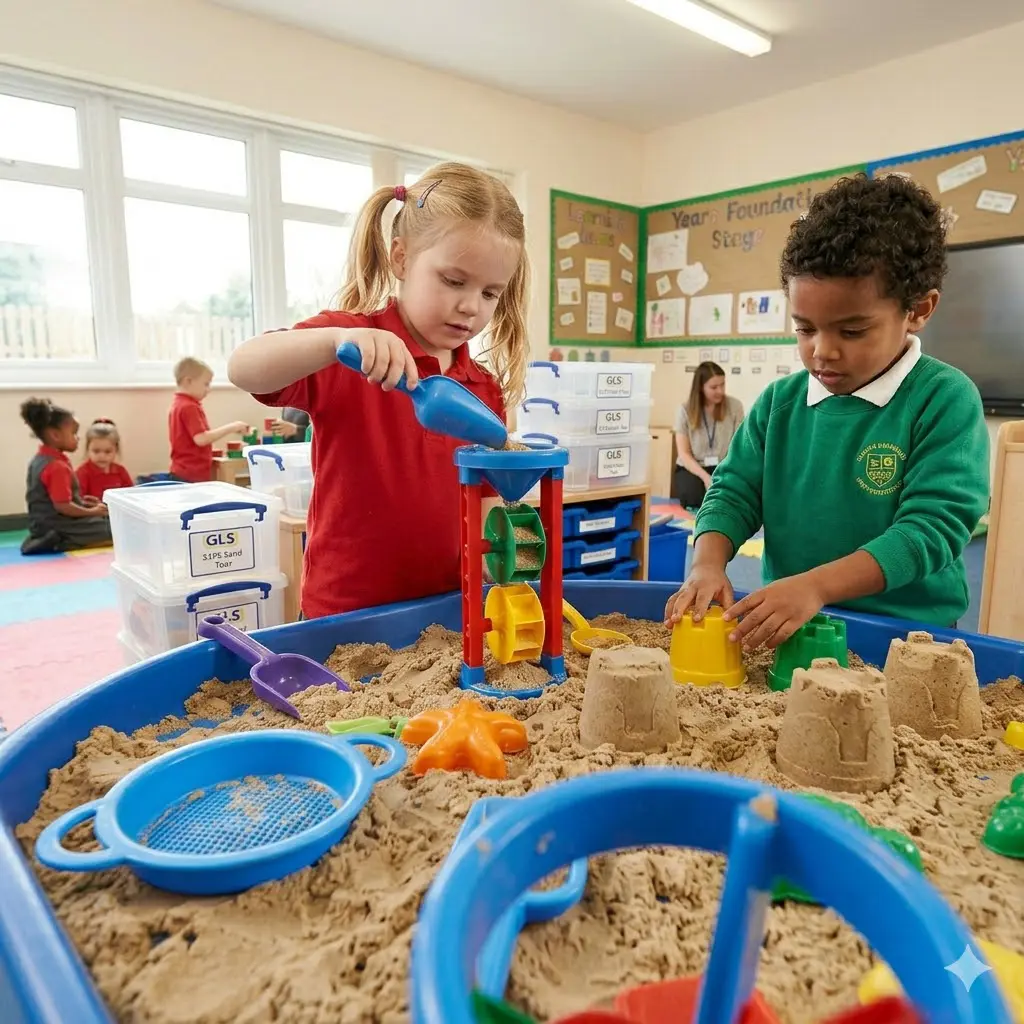
Sand play resources for EYFS: trays, accessories and learning ideas
Sand play remains one of the most valuable and versatile areas within an Early Years environment. Far more than a sensory activity, a well-planned sand area supports communication, physical development, mathematical thinking and scientific exploration. Whether used indoors as part of continuous provision or outdoors within a larger learning environment, the right combination of trays, resources and practitioner interaction can transform simple sand play into a rich source of learning opportunities across the EYFS curriculum.
Carla Bonner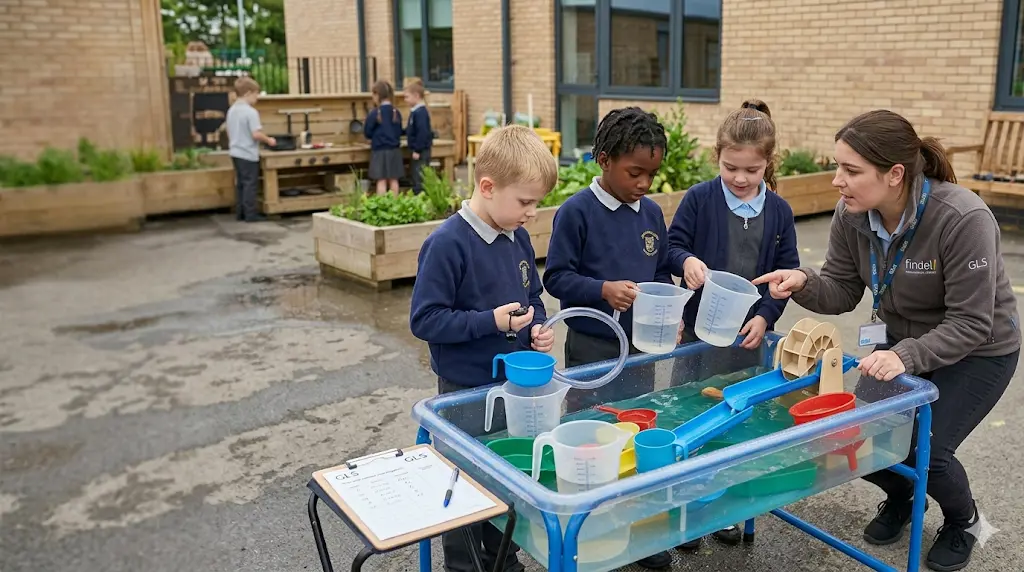
Water Tray Accessories for Schools: What to Buy for EYFS and KS1
Water play supports maths, language development, fine motor skills and exploration, making it a valuable part of Early Years and Key Stage 1 learning. The best water trays use simple, open-ended resources that encourage discovery and creativity.
Natalie McMunn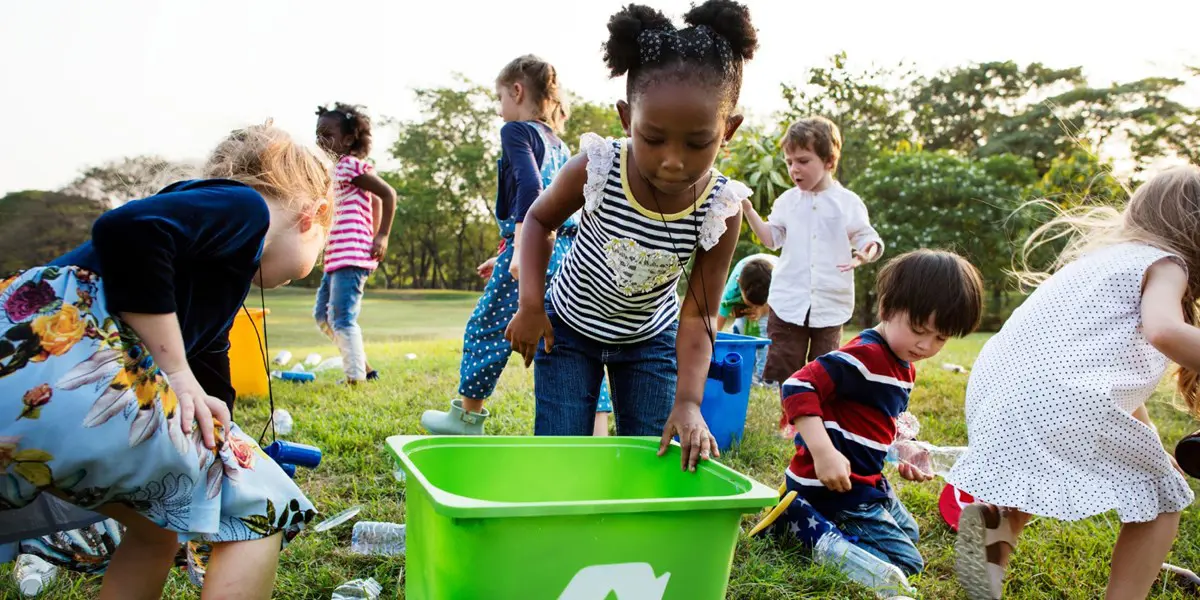
Recycling management tips for nurseries
Check out our tips in aiding your nursery to be more green with these recycling management tips.
Make your nursery stand out from the rest
Some key areas to focus on when making your nursery stand out against the rest.
School Nursery Funding
Learn how the School-Based Nursery Capital Grant can help primary schools in England unlock up to £150,000 in funding to expand nursery spaces.
Frequently Asked Questions
What resources does an EYFS classroom need?
An effective EYFS classroom provides resources that support all seven areas of learning and development, including role play, small world play, sensory resources, construction materials, literacy resources and outdoor learning opportunities.
What are the seven areas of learning in the EYFS framework?
The EYFS Statutory Framework (2025) identifies Communication and Language, Personal, Social and Emotional Development, Physical Development, Literacy, Mathematics, Understanding the World, and Expressive Arts and Design.
Why are mud kitchens important in EYFS?
Mud kitchens encourage communication, creativity, mathematical thinking, physical development and exploration through open-ended outdoor play.
What should every water play area include?
Most water play areas include measuring containers, funnels, floating objects, buckets and open-ended investigation resources.
How does small world play support children's development?
Small world play supports communication, storytelling, vocabulary development, imagination and understanding of people, places and communities.
Are sensory resources only for children with SEND?
No. Sensory resources support exploration, engagement and learning for all children while also contributing to inclusive classroom environments.
Is outdoor learning required in EYFS?
Yes. The EYFS Statutory Framework (DfE, 2025) requires access to both indoor and outdoor learning environments.
How should schools set up an EYFS classroom?
Effective EYFS classrooms provide opportunities for children to learn across all seven areas of learning through well-planned continuous provision, accessible resources and rich learning environments.
Stay connected with GLS
Follow GLS for practical classroom ideas, product inspiration, school procurement guidance and the latest education news.