
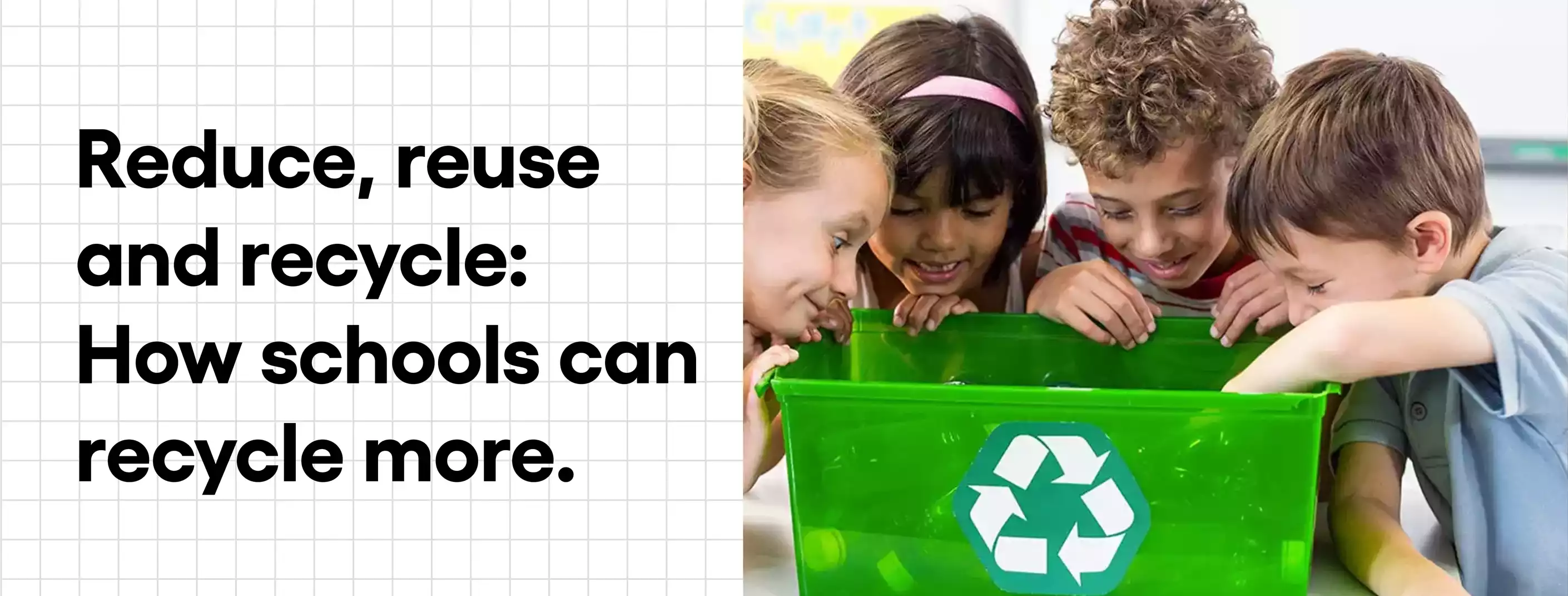
Reduce, reuse and recycle: 8 practical ways schools can recycle more
Quick Answer
Schools can reduce waste by making recycling simple, auditing what they throw away, reusing materials before replacing them, separating food waste correctly and involving pupils and staff in everyday habits. A practical whole-school approach can cut unnecessary waste, support sustainability learning and help recycling become part of normal school routines rather than a one-off initiative.
In this article
- Why is reducing and recycling waste important in schools?
- What should schools know about recycling rules?
- How can schools recycle more? 8 practical ideas
- What challenges do schools face when trying to recycle more?
- What mistakes should schools avoid?
- How can schools implement recycling successfully?
- How does GLS support schools with sustainability?
- Conclusion
Why is reducing and recycling waste important in schools?
Schools use a considerable amount of paper and card, food, packaging, classroom resources and school stationery every day. Reducing what becomes waste in the first place, reusing resources where possible and recycling correctly can therefore make a meaningful difference.
It can also provide valuable learning opportunities. Pupils can take part in waste audits, monitor recycling, explore composting and consider how everyday choices affect the environment. The Eco-Schools Environmental Review, for example, encourages pupils to assess areas including waste and use their findings to identify environmental improvements across their school.
It helps to think beyond recycling alone. The waste hierarchy prioritises preventing waste first, followed by preparing items for reuse and then recycling. For schools, that could mean reviewing purchasing habits, using existing classroom resources for longer and choosing refillable or recycled alternatives before simply concentrating on what goes into the recycling bin.
What should schools know about recycling rules?
Schools should understand which waste streams their waste provider collects and make sure staff and pupils know how to separate them correctly.
For schools in England, the Government's Simpler Recycling rules specifically include places of education. Most workplaces must separate dry recyclable materials such as plastic, metal, glass, paper and card from food waste and non-recyclable waste before collection. Micro-firms with fewer than 10 full-time equivalent employees have until 31 March 2027 to comply.
Requirements differ across the UK, so schools should check the guidance that applies in their nation and speak to their local authority or waste contractor where necessary.
How can schools recycle more? 8 practical ideas
1. Carry out a school waste audit
The best place to start is understanding what your school currently throws away.
Look at the waste generated in classrooms, offices, staff rooms, kitchens, dining areas and outdoor spaces. Which materials appear most often? Are recyclable items ending up in general waste? Are resources being thrown away that could have been reused?
A simple waste audit can help you establish a baseline and identify the areas where small changes could have the biggest impact.
Remember to include suppliers and contractors too. If catering, cleaning or other services are outsourced, find out how waste is handled and whether the arrangements support your school's wider sustainability goals.
Involving pupils can make this much more than an administrative exercise. An eco-committee or class group could record findings, create graphs and suggest improvements, helping to connect sustainability with maths, science, geography and citizenship.
2. Make recycling easy for everyone
Awareness campaigns are useful, but recycling also needs to be convenient.
Place clearly labelled recycling bins wherever waste is regularly created rather than expecting pupils or staff to walk across the building to find one. Classrooms, offices, photocopying areas, staff rooms and dining spaces may all need different arrangements.
Simple bin labels using words, pictures and consistent colours can help pupils understand what belongs where. Check the system against the materials accepted by your waste contractor to reduce contamination.
It is also worth considering how to reduce single-use items. Accessible water fountains and reusable water bottles can help reduce dependence on disposable drinks bottles, while reusable lunch containers can support the same approach at lunchtimes.
3. Raise money while encouraging reuse
Not everything your school no longer needs has to become waste.
Clothing and textile collections can give families an opportunity to clear out unwanted items while supporting reuse. The original article highlighted Bag2School, a textile fundraising service that has worked with schools since 1999. The organisation currently states that more than £48 million has been paid to participating schools and other organisations.
Before choosing a scheme, check exactly which materials are accepted and explain this clearly to families. Bag2School, for example, currently excludes some items including duvets, pillows and school uniforms, so up-to-date collection guidance matters.
If the activity also raises funds, tell families what the money will support. A clear purpose can make the project feel more relevant to the whole school community.
4. Start a school compost
Food and garden waste can be another opportunity to reduce what leaves the school as rubbish.
A compost bin can turn suitable fruit and vegetable waste, leaves, grass cuttings, shredded paper and cardboard into organic matter that can eventually be used in a school garden.
Composting can also become part of learning. The RHS links school composting with science, geography and environmental responsibility, covering topics such as decomposition, soil health, nutrient cycles and sustainable waste management.
Choose the location carefully and decide who will be responsible for maintaining it. Gardening tools can also help pupils become involved in turning compost and using the finished material in growing areas.
Avoid putting cooked food or dairy products into a conventional school compost heap, as the RHS advises that these can attract vermin.
5. Choose reusable and recycled supplies
Recycling works best alongside smarter purchasing.
Before ordering something new, ask whether existing supplies can be repaired, shared or reused. When replacement is necessary, look at durability, refill options, recycled content and how easily the item can eventually be recycled.
Schools now have environmentally conscious alternatives across many everyday categories, including recycled sticky notes, recycled pencils, recycled card, recycled clipboards, recycled plastic wallets, refillable pens and reduced-plastic or plastic-free adhesive tape.
GLS currently stocks recycled stationery options including pencils made using recycled materials and recycled card for classroom art and design activities.
The most sustainable option will not always be the product carrying the strongest environmental claim. Consider how long an item will last, whether it can be refilled or repaired and whether your school genuinely needs it.
6. Encourage pupils to reduce waste
Friendly challenges can help turn sustainability into something pupils actively participate in rather than simply hear about.
Classes could measure how much paper they save, monitor recycling contamination or look for ways to reuse classroom resources. Rather than rewarding whichever class simply collects the most waste, consider recognising the class that prevents the most unnecessary waste or comes up with the most practical idea.
Pupils could also create posters, deliver assemblies or become recycling monitors.
The aim should be to build habits rather than run a competition that disappears after a week.
7. Make sure staff understand the system
A recycling system will only work consistently if staff know what is expected.
Include teaching staff, office teams, lunchtime supervisors, site teams, cleaners and catering colleagues. Different roles generate different types of waste, so the guidance needs to make sense for their working environment.
Keep training practical. Show people where waste containers are located, explain what belongs in each one and highlight common sources of contamination.
It can also help to nominate someone to review arrangements periodically. Waste contracts, packaging and school routines change, so a system that worked two years ago may no longer be the best option.
8. Show pupils what happens to waste
Helping children understand what happens after something is thrown away can give recycling much more meaning.
Consider whether a local recycling facility, waste contractor or environmental organisation offers school visits, workshops or virtual learning opportunities. If an external visit is not practical, pupils could investigate where different school waste streams go after collection and present their findings.
This can lead naturally into discussions around reducing consumption, reuse, recycling, composting and the wider circular economy.
What challenges do schools face when trying to recycle more?
One of the biggest challenges is consistency. A school may have recycling bins available but still find recyclable material in general waste because labels are unclear, bins are poorly positioned or different areas follow different systems.
Contamination is another common problem. Food, liquids or unsuitable materials can make recycling harder to process, so schools should base their guidance on what their waste collector actually accepts.
Budget and staff time also matter. Sustainability plans need to be realistic enough to maintain throughout the year. Start with manageable changes, monitor what happens and expand the approach once the basics are working.
What mistakes should schools avoid?
Avoid treating recycling as a one-off themed week. Assemblies and competitions can create interest, but everyday systems will make the bigger difference.
Schools should also avoid focusing exclusively on recycling. Preventing waste and reusing supplies should come first wherever practical.
Another mistake is introducing several different bins without clear instructions. More containers do not automatically create better recycling. The locations, labels and collection arrangements need to work together.
Finally, do not assume that every product described as environmentally friendly will automatically be the best choice. Consider durability, recycled content, refillability, packaging and how the item will be disposed of at the end of its useful life.
How can schools implement recycling successfully?
Start small and make responsibilities clear.
Complete a waste audit, agree two or three priorities and decide how success will be measured. That might mean reducing general waste, cutting paper use or improving food waste separation.
Give pupils a meaningful role through an eco-committee or class representatives and make sure staff understand the same system. Review progress regularly and share successes with the school community.
Most importantly, design changes around normal school life. The easier a sustainable choice is to make, the more likely it is to become a lasting habit.
How does GLS support schools with sustainability?
Schools often need to balance sustainability goals with budgets, practicality, availability and the demands of busy classrooms.
GLS supports schools by providing everyday classroom, office and facilities supplies alongside a growing choice of recycled and reusable alternatives. That can help procurement teams compare options and make practical decisions without sustainability becoming a separate purchasing exercise.
The focus does not have to be on replacing everything at once. Schools can introduce changes gradually — perhaps choosing recycled pencils when existing stock runs out, moving to refillable pens or reviewing paper and card purchases as part of the next normal order.
For school business managers and procurement teams, this makes sustainability easier to build into everyday buying decisions.
It is a practical approach that reflects what GLS means by Schools. We get you.
Conclusion
Schools do not need to transform their approach to waste overnight.
Start by understanding what is currently being thrown away, reduce unnecessary purchasing, reuse what you already have and make recycling straightforward. Add pupil involvement, staff awareness and sensible procurement decisions, and small changes can become everyday habits across the school.
Reducing, reusing and recycling works best when it becomes part of how the whole school operates rather than another task on the to-do list.
Frequently asked questions
Author
Gary McCormick